Top Menu

Page

Videos

In Society

In Politics

Latest Opinions

Only 10% of students have access to higher education in country!!

8:57 AM
Access to education beyond higher secondary schooling is a mere 10% among the university-age population in India. This is the finding of a report "Intergenerational and Regional Differentials in Higher Education in India" authored by development economist,Abusaleh Shariff of the Delhi-based Centre for Research and Debates in Development Policy and Amit Sharma, research analyst of the National Council of Applied Economic Research.

The report says that a huge disparity exists — as far as access to higher education is concerned — across gender, socio-economic religious groups and geographical regions. The skew is most marked across regions. Thus, a dalit or Muslim in south India, though from the most disadvantaged among communities, would have better access to higher education than even upper caste Hindus in many other regions. Interestingly, people living in Bihar, Uttar Pradesh and West Bengal — designated as the north central region — and those in northeast India have the worst access to higher education. Those in southern India and in the northern region — consisting of Jammu & Kashmir, Punjab, Himachal Pradesh, Uttarakhand, Chandigarh, Haryana and Delhi — are relatively better placed in this regard. 

In the age group 22-35 years, over 15% in the northern region and 13% in the southern region have access to higher education. In the north-central region, the number is just 10% for men and 6% for women whereas in the northeast, only 8% men and 4% women have access to higher education. 

The report, brought out by the US-India Policy Institute in Washington, is based on data from the 64th round of NSSO survey 2007-08. It throws up quite a few other interesting facts. For instance, among communities, tribals and dalits fare worst with just 1.8% of them having any higher education. Muslims are almost as badly off, with just 2.1% able to go for further learning. Similarly, just 2% of the rural population is educated beyond higher secondary level, compared to 12% of the urban population and just 3% of women got a college education compared to 6% of men. 

South India offers the best opportunities for socially inclusive access to higher education including technical education and education in English medium. For instance, the share of Hindu SC/ST in technical education in south India is about 22%, and the share of Muslims 25%. These were the lowest shares among all communities in south India. But this was higher than the share of most communities including Hindu OBCs and upper caste Hindus in most other regions. South India also has the highest proportion of higher education in the private sector at about 42%, followed by western India where it is 22%. The northeast has the least privatized higher education sector and is almost entirely dependent on government-run or aided institutions. 

Not surprisingly, government institutions are the cheapest places to study at, with annual expenditures ranging from less than Rs 1,000 to around Rs 1,500, except in north and south India, where the average is above Rs 2,000. Both private and privateaided institutions are quite costly, making them difficult to access for the poor. With little regulation of the quality of education and cost differentials, the poor and deprived are often trapped in low quality education, the report points out. It adds that although free education is provided at school level, it is almost non-existent at higher levels. 

The report also compares India's low 10% access to higher education with China's 22% enrolment and the 28% enrolment in the US. Since the early 1990s, China's post-secondary enrolments grew from 5 million to 27 million, while India's expanded from 5 million to just 13 million, says the report, while emphasising that higher education has the potential to enhance productivity and economic value both at the individual and national levels. 

"The government has to urgently address the geographical skew in the availability of higher education facilities in the two regions of north-east and north-central," says Shariff. "The central region, comprising Chhattisgarh, MP, Rajasthan, Jharkhand and Odisha, too needs attention. There is so much talk about a Harvard in India. I say, give two hoots to Harvard. What we need are thousands of community colleges that can offer professional courses so that youngsters can improve their skills and become employable."


Note: This article is taken from Timesofindia.com.

Kiss a same sex friend, take a photo, post it on Facebook: Gay for a day movement goes viral a day after SC ruling

1:25 PM
The Supreme Court of India on Wednesday ruled against decriminalising gay sex - something that left the LGBT community disappointed. While the Court may have gone by the law, on Twitter and other social networking sites, the court's order sparked a revolution of sorts.

The Supreme Court bench of Justice G.S. Singhvi and Justice S.J. Mukhopadhayay, on Wednesday set aside the Delhi High Court verdict of 2009, and said there was no constitutional room for change in Section 377 of the Indian Penal Code (IPC).

Section 377 of the IPC holds that same-gender sexual relationship is against the order of the nature and is an offence. The apex court upheld the constitutional validity of the section.

While the reactions to the Supreme Court's order were restricted to 140 characters by the twitterati, on Facebook, the Court's order ignited a movement: the Gay For a Day movement.

On the Facebook page created for this purpose, the administrator, Tanmay Sahay, wrote, "All you have to do is change your profile picture to one in which you are kissing someone from your gender in protest of the Supreme Court of India's ruling that criminalizes homosexuality. And at this very difficult time, we must support of our friends and family and fellow citizens for their right to express their sexuality."

Kimani Maruge-The First Grader

1:28 AM

The soldier who fought for the right to go to school in Kenya


Former Mau Mau freedom fighter Kimani N'gan'ga Maruge was 84 when he first went to school. 
When Kimani Maruge burst into the public limelight, I thought it was a bad joke, a publicity stunt gone too far. Seriously, how could a man aged over 80 enrol in Standard One? Nevertheless, I followed his ‘educational career’ with detached interest.
Two years down the line the man was still at it. So the guy was serious after all? I was now asking myself. Slowly he was winning me over. And yes he had become a media superstar. Boy, did the media love Maruge? And he rarely disappointed. He always came up with soundbites, that TV people ran over and over again.
My most enduring image was of the old man with a blue (I am colour blind) blazer, with matching knee-length shorts. His socks were always pulled to the base of his knees. And below them was a pair canvas shoes popularly known as Bata Bullets.
Thus dressed, and with his ubiquitous cane Maruge would drag one heavy foot after the other on his way to school.
It did not take long before the folks at Guinness Book of Records took notice, and he promptly entered their books for the dogged way he sought to get educated. He became the world’s oldest pupil.
This man kept telling everyone who cared to listen that he went to school so that he would be able to read the Bible, and soon he was reading his favourite book.
It was worthy noting here that Maruge despite his advanced age wanted to learn how to read. His example put to shame many people who soon after they are through with formal schooling throw away their books. You’ve probably heard of infamous academic bonfires, where secondary school leavers pile all their books and set fire to them.
In their foolish thinking that is the end of them and reading. These are people who have been socialised to think that reading is a form of torture, that is only tolerated for the sake of sitting exams.
During the just concluded Storymoja Hay Festival I attended a session where Muthoni Garland, the managing director of Storymoja, told the story of a young woman who came looking for a job in her firm.
When Muthoni asked the young woman the last title she read a book, the young woman shamelessly told her that she no longer reads and she had now finished schooling! Muthoni says she was scandalised and rightly so. Here is a person who hopes to be employed in a publishing firm, and who does not read.
Well, that girl is in good company. There are quite a number of people who work in our publishing houses, who do not read. Don’t ask me how I know.
Back to Maruge. As a media star, his star never faded. He continued to attract media attention in almost everything he did. Such was his star power that the Kenya Publishers Association (KPA) invited him as a guest during the 2005 edition of the Jomo Kenyatta Prize for Literature awards at the Nairobi International Book Fair.In his speech Maruge, then in Standard Five, counselled on the need to cultivate a healthy reading culture. He also took the opportunity to urge the youth against engaging in casual sex.
After that Maruge retreated to his quiet lifestyle in Kenya’s Rift Valley, where he continued with his studies. The next time I heard major news on him was after the post-election violence, where he was talking to the media from an Internally Displaced Persons’ (IDP) camp.
He had been ejected from his home for belonging to the ‘wrong tribe’.
And that is how he landed in a home for the aged, in Nairobi, from where he continued with his education. All this time, he pledged to pursue his education up to university level.
By now, Maruge was looking frail, and he spoke with difficulties, but still his star power was unmistakable. Everything he did attracted media attention.
This included his baptism ceremony at a Nairobi church. Meanwhile Hollywood was planning to shoot a major movie based on his life. Titled the First Grader, the movie unfortunately, could not be shot in Kenya as the relevant authorities levied exorbitant taxes on the moviemakers. South Africa gave them tax incentives they sought and that for the umpteenth time the South African country got to shoot a movie originally destined for Kenya.
I must mention here that I was involved, in a small way in scouting for a suitable person to play the part of Maruge, but that is a story for another day.
Maruge died on August 14, at the Chesire Home for the aged in Kariobangi North, where he was staying, from complications of stomach cancer. He was aged 89.

Bachpan Bachao Andolan -Save the childhood Movement

8:42 PM
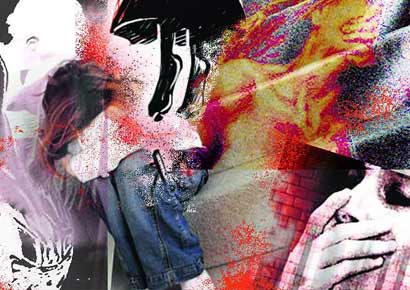
                 Everyday around 40 girls in India, are forced into prostitution.
                                        Don't just watch - Take Action

Bachpan Bachao Andolan (BBA) is not a conventional NGO or a typical institution; it is the ray of hope in millions of hearts, the first dream in their eyes, and the first smile on their faces. It is the sky and wings together for innumerable children, excluded from human identity and dignity, with a desire to fly in freedom. It is the tears of joy of a mother who finds her rescued child back in her lap after years of helplessness and hopelessness. It is a battle to open the doors of opportunities, a fire for freedom and education in the hearts and souls of thousands of youth committed to wipe out the scourge of slavery and ignorance from the face of mankind.


Basic Info

Contact Info


'पिंजरों' में सिसकती ज़िंदगी का दर्द!!

5:25 PM
ब्रितानी फोटो पत्रकार हैज़ल थॉम्पसन पिछले एक दशक से भारत में देह व्यापार में धकेल दी गई लड़कियों की ज़िंदगी पर ध्यान दे रही हैं. इस बारे में उन्होंने अपने अनुभव आतिश पटेल से साझा किए.
गुड्डी तब महज 11 साल की थी, जब उसका एक पड़ोसी उसके परिजनों को बहलाकर उसे मुंबई ले आया था. गुड्डी का घर मुंबई से सैंकड़ों मील दूर पश्चिम बंगाल में गरीबी की मार झेल रहे एक गांव में है.
उसे घरेलू नौकरानी का काम दिलाने का झूठा वादा किया गया और अच्छी तनख़्वाह वाली नौकरी से परिवार की मदद करने का लालच भी.
लेकिन इसके बजाय उसे एशिया की सबसे बड़ी देह मंडियों में से एक क्लिक करेंकमाठीपुरा में एक सेक्स वर्कर बना दिया गया.
वहां एक ग्राहक ने उसके साथ बलात्कार किया और इसके बाद तीन महीने उसे अस्पताल में रहना पड़ा.

दुखद दास्तान

दिल दहला देने वाली यह दास्तान अकेली गुड्डी की नहीं है.
कमाठीपुरा के 20,000 यौनकर्मियों की ऐसी ही कुछ कहानी है. यह वही कमाठीपुरा है जिसकी शुरुआत 150 साल पहले औपनिवेशिक शासन के दौरान मुंबई में ब्रितानी सैनिकों की 'ऐशगाह' के रूप में हुई थी.
थॉम्पसन कहती हैं, "उसका मनोबल तोड़ने के लिए उसका बलात्कार किया गया."
थॉम्पसन का कमाठीपुरा सफ़र साल 2002 में शुरू हुआ. शुरू-शुरू में वे वहां देह व्यापार से पैदा हुए बच्चों की तस्वीरें लेने आई थीं. बाद में उन्होंने अपने अनुभव पर एक ई-बुक लिखी - 'टेकेन'.
कमाथीपुरा
मुंबई का कमाठीपुरा इलाका एशिया का मशहूर रेड लाइट इलाका है.
एक ओर लाखों की ग़रीबी दूर करने वाले भारत की नई आर्थिक उन्नति का प्रतीक मुंबई है, तो दूसरी ओर चमकती दमकती गगनचुंबी इमारतों वाली मुंबई को मुंह चिढ़ाता एशिया का यह सबसे बड़ा और पुराना रेडलाइट एरिया भी है.
14 गंदी और तंग गलियों की एक भूलभूलैया. मुंबई के इस इलाक़े में वक़्त मानो ठहर गया है.

जिसने रचा कमाठीपुरा

19वीं शताब्दी के दौरान ब्रितानी सेना ने पूरे भारत में अपने सैनिकों के लिए कई वेश्यालय बनाए.
गांवों के ग़रीब घरों से कमसिन लड़कियां यहां देह व्यापार के लिए लाई जाने लगीं. उन्हें सीधे सेना से पैसे मिलते थे और सेना ही उनकी क़ीमत तय करती थी.
1864 के बाद मुंबई के आसपास आठ ऐसी बस्तियां थीं, जहां 500 से ज़्यादा यौनकर्मी रहती थीं. करीब 60 साल बाद उनमें से केवल दो बस्तियां बचीं, जिसमें कमाठीपुरा सबसे बड़ी थी.
मिस थॉम्पसन बताती हैं, "वहां वही परंपरा आज तक जारी है."
साल 1890 में हिंसक ग्राहकों से बचाने के लिए पुलिस ने स्त्रियों के लिए वेश्यालय की खिड़कियों और दरवाजों पर सलाखें लगवा दी थीं.
ईबुक टेकेन
हैज़ल थॉम्प्सन की ईबुक 'टेकन' कमाठीपुरा की यौनकर्मियों पर आधारित है.
कई महिलाएं आज भी ब्रितानियों के बनाए इन 'पिंजरों' में रहतीं और काम करती हैं.
थॉम्पसन का दावा है, "पिछले 120 सालों से कमाठीपुरा में कुछ नहीं बदला है. कुछ भी नहीं."
वह बताती हैं कि आजकल यहां स्त्रियां सेक्स के बदले 500 रुपए लेती हैं और 12 से 16 साल के बीच की लड़कियां 2,000 रुपए तक कमा सकती हैं.
कुंवारी लड़कियों के लिए ऊंची बोली लगती है.

आधुनिक गुलामी

35 साल की इस फोटोग्राफ़र को कमाठीपुरा की इस रहस्यमयी दुनिया में जाने का मौक़ा तब मिला, जब वे 'बॉंबे टीन चैलेंज' नाम की चैरिटी संस्था में पहुंची.
इस संस्था में उन्हें ऐसी पुरानी यौनकर्मी और दलाल मिले, जो 20 साल से कमाठीपुरा से यौनकर्मियों को निकालने और उनके पुनर्वास के काम में लगे थे.
वह उस इलाके में एक सहायता कर्मचारी के रूप में जाती हैं और अपने दुपट्टे, इमारत की छतों और वहां खड़ी गाड़ियों की आड़ से छिपकर तस्वीरें लेती हैं.
उन्होंने बताया, "मैं वहां जाती और अपना काम कर फटाफट निकल जाती. कुछ दिन रहती और जब इस ओर ध्यान जाने लगता तो निकल जाती."
वे जब भी वहां जातीं, उन्हें एक ख़तरा महसूस होता और इसका चरम तब आया, जब साल 2010 में एक यौनकर्मी से बात करते हुए एक बदमाश ने उन्हें देख लिया और उनके साथ हाथापाई की.
उन्होंने आगे बताया, "कमाठीपुरा में सच जानने के अपने सफ़र के दौरान मैंने कई बार पीछे हटने की सोची."

सेक्स की खरीद

मिस थॉम्पसन की ई-बुक 'टेकेन' में शब्दों, चित्रों और वीडियो के ज़रिए कमाठीपुरा के जीवन की एक तस्वीर उकेरने की कोशिश की गई है. इसमें उन स्त्रियों की दास्तान भी दर्ज हैं, जो इस 'आधुनिक गुलामी' से बच निकलने में कामयाब रहीं.
जैसे कर्नाटक के दक्षिणी इलाके से आने वाली 16 साल की लता. लता को उसके दोस्त ने ही नशा करवाकर इस दलदल में धकेला था.
सेक्स वर्कर
लता वह यौनकर्मी है जो 'मुंबई टीन चैलेंज' चैरिटी संस्था की मदद से कामथीपुरा से बच निकलती है.
सालों बाद 'मुंबई टीन चैलेंज' संस्था ने उन्हें वहां से निकाला और परिवार से मिलाया. अब वह संस्था द्वारा चलाए जा रहे एक पुनर्वास केंद्र में रहती हैं
थॉम्पसन कहती हैं, "11 साल तक मेरा वहां आना जाना रहा. इस दौरान मुझे ऐसी एक महिला नहीं मिली, जिसने अपनी मर्ज़ी से यह काम चुना हो. ये औरतें या तो यहीं जन्मी थीं या तस्करी के ज़रिए लाई गई थीं."
'सेक्स की ख़रीद अपराध घोषित हो' इसके लिए यह फ़ोटोपत्रकार ब्रिटिश 'जुबली चैरिटी' संस्था के साथ मिलकर भारत और दूसरे देशों के लिए एक अभियान शुरू करने जा रही हैं.
अप्रैल में, भारत सरकार ने मानव तस्करी से जुड़े अपराध के दायरे को विस्तृत करने के लिए क़ानून में संशोधन किया. सरकार ने मानव तस्करों के लिए कठोर सज़ा की भी व्यवस्था की.
अमरीका की मानव तस्करी से जुड़ी 2013 की एक रिपोर्ट 'यूएस स्टेट डिपार्टमेंट ट्रैफिकिंग इन पर्सन' के अनुसार तस्करी विरोधी कानून को लागू करना आज भी एक समस्या है.
थॉम्पसन कहती हैं, "स्वीडन और नार्वे जैसे देशों ने जब यौन सेवाओं की खरीद को अवैध घोषित किया तो यौन सेवाओं की मांग पर इसका गहरा असर पड़ा. तस्करी में काफी गिरावट आई.
Source-BBC.CO.UK

National Interest: AAP ki adalat

2:43 PM
Discussion
Shekhar GuptaThe Indian Express Group

Shekhar Gupta-

Shekhar Gupta
Verdict so far: they brilliantly disrupt old politics but yet to figure out their own.
At the heady peak of the Anna Hazare movement in 2011, the question we were often asked was, so why are you so against this anti-corruption movement that will send thieving netas to jail? In condemnatory Twitter precis, it was usually worded more pithily: You are pro-corruption.
This is a useful time to list our arguments against the Anna movement. First, that while corruption was a terrible problem, its solution was not the creation of an omnipotent Lokpal answerable to none and a police state. Also that the Jan Lokpal Bill, in that form, was unconstitutional and undemocratic and would never pass. The larger solution to corruption was governance reform and reducing areas of friction between the ordinary citizen and the sarkar. Second, that the movement was so apolitical, so bereft of political energy, that it was bound to lose momentum as ideology (not just idealism) is the fuel of popular movements in democracy. Third, that its "mera neta chor hai" approach to India's problems, thereby condemning Indian politics, was flawed. That while there was a lot that was rotten with the system, you couldn't cleanse it from the outside. You had to come inside the larger democratic — and political — tent and force the traditional politician to compete with you on ideas and ideologies. And fourth, that politics is never simply black or white. It is even more complex than mere shades of grey. It is inclusive, accommodative, negotiatory, unforgiving and merciless. So don't just condemn your politics. Join the fray and rout the "bad guys".
Two years hence, we can report with journalistic satisfaction that each one of these arguments is won. The Jan Lokpal Bill is now history. Anna's movement is finished and those that glowed in his giant halo are now fighting with him like schoolchildren, with Anna pretty much accusing them of stealing his trademarks. Anna's children, led by the most favourite and impressive of them all, Arvind Kejriwal, have now become a regular political party with caps, slogans and an election symbol. And finally, though some could still argue that the jury is out on this one, they are realising the complexities of our politics and governance.
                                                                                                                                          conti.... 
                                             Click here to read the whole article

Job for votes: Food for thought

10:04 AM
When Uttar Pradesh chief minister Akhilesh Yadav visited the riot affected areas in Muzzafarnagar yesterday, he reportedly promised jobs. Similarly, when someone dies in the service of the nation, their families too are offered jobs by the government. It’s a currency which most grief-stricken people quickly identify with despite their loss.

Strangely no head of state ever offers them food. Yet when it comes to deciding on the future of its citizen’s the government feels it’s actually food security, which will solve their problems.

Wrong timing of populism:

In reality, the food security bill is designed to solve their own problems – that of votes - as the impending general elections draw closer. On the face of it though there is nothing wrong with the policy considering it’s designed to further inclusiveness and make available food to the poorest (200 million plus stay under the poverty line) at a fraction of its cost. It’s actually the timing that is all wrong. The country is going through one of its worst economic crises since 1991 when it had to go through the embarrassment of pawning gold to pay for imports. It’s a shade better now since we have enough forex reserves to pay for around seven months of imports, more specifically fuel. The twin deficits – current account and fiscal deficit – is a huge threat, coupled with lower prospects of growth, high inflation, currency depreciation and finally the threat of a sovereign downgrade.

All populist policies like farm loan waiver, NREGA (National Rural Employment Guarantee Act) and food security schemes, which have their basis in inclusive growth, actually add to higher subsidies and defeats attempts towards fiscal consolidation. In short it burdens the economy. Estimates suggest that subsidies now account for 42% of gross fiscal deficit. Analysts believe the food security scheme will add to the deficit burden substantially at a time when it can ill afford. Why? That’s because it could lead to a sovereign downgrade. And this would take the country from its lowest investment grade to a junk status, and would lead to a mandatory exodus of several foreign funds from the country. That’s not all. There are laws in some countries which do not allow these funds to invest back even after the ratings are upgraded (which usually takes at least two years) as rules there specify mandatory waiting period of several months to be able to re-enter that country.

So knowing very well that jobs are the biggest currency for urban and rural folks alike, the UPA government would have done better to sound its political bugle by announcing a new policy around jobs. After all, it’s seen the political benefits of NREGA.  

Fewer jobs:

Data from AICTE, which regulates technical education in India, suggests there were 1,511 engineering colleges across India, which had 550,000 students graduating in 2006-07. Both have doubled since then. The number is much larger when graduates of all streams are taken into account. It’s still another thing that a substantial number are unemployable.  But when it comes to the number of jobs, there would be fewer opportunities this year given the slowdown, which translates into more disgruntled voters and the possibility of a demographic dividend transforming into a potential time bomb.


A smart strategy would therefore have been to include the aspirations of the youth - roughly 150 million first time voters (aged 18 to 23) in their political math. The youth is keenly looking at the job market. Unfortunately for them, jobs have now reduced. The IT industry for instance, which hires over 50 % of the new engineering graduates alone, is expected to hire 50,000 less people. For the Indian economy which added 14 million jobs to the workforce in the two years ended 2011-12, (12 million join the labour force every year) the outlook now looks bleak.

Why are jobs reducing?

The reason jobs are fewer is because companies are not expanding and not taking up new projects either because they are not being able to get land, clearances, or because high interest rates have rendered their projects unviable.

What’s going to hit them harder now is the new land acquisition bill. Again a bold move, which will empower farmers and give them the right price for their land, while making land acquisition so difficult for certain companies that projects would have to be shelved or inordinately delayed. Instead, the government should have brought in safeguards to ensure that the farmers get their price but a project is not delayed. That’s because in simple terms no project equals to no jobs and more pain.

More youth from the rural areas are migrating to cities in search of jobs despite the fact that NREGA created more avenues of engagement within rural areas. NSSO data suggests that the share of agriculture for rural males in employment, which accounts for the biggest source of jobs, dropped almost 10 % to 59 % in the last couple of years. So, instead of letting them stay illegally in the city footpaths – again for votes – it’s better to build more cities which can offer them an opportunity. The Delhi-Mumbai Industrial Corridor, which would create many new cities along with industrial hubs and jobs are models of infrastructure development that the government should encourage and perhaps even subsidise as this is what would create long term jobs and well being for its people.

Capital punishment should be anathema to a socially and economically aspiring India

10:03 AM
The death sentence awarded to the four convicts in the barbaric December 16 rape-and-murder of Nirbhaya has, once again, brought us bang into the middle of a national debate over capital punishment. The arguments in favour of and against the death penalty have been analysed and dissected and yet the controversy refuses to go away. The issue is extremely emotional, now and then bursting into flames as brutal terror acts and a horrible harvest of heinous crimes deeply shock the public, provoking indignant protests and clangorous demands for extreme and exemplary judicial punishment.
The sentence, which will now deliver, at an unspecified time and pending appeals in the appellate courts, the four men to the hangman, has brought to the fore our desire to get even — a natural human tendency that exists in almost everyone. But isn't it time we inquire about the extent to which this feeling of "an eye for an eye" should influence society's and the judiciary's verdict against men condemned to die? Does a mere execution set society free? Why not torture the convicts first so they will know and feel the pain and agony of being flayed by a jack-hammer?

This would be consistent with the popular view that justice requires payment in kind and for a few days people rejoice in the legitimate infliction of suffering and death, all the time convinced that men who commit unspeakable acts of rape-and-murder must get their just deserts.

Despite the familiar furnishing of graphs, figures and data, that there is no convincing proof that the death penalty has a deterrent effect on heinous crimes, proposals to make capital punishment mandatory where rape and murder are both involved or to retain it, if not expand its application, proliferate. Punishment by death then becomes an expression of the impulse for individual and collective self-defence "moralised by the feeling of sympathy."

Deeply ingrained in the judicial and social psyche is the belief that punishment by death is an evil that is justified as a means of avoiding greater evil. This suggests that rapists and murderers must be executed for retributive reasons: they should suffer to their very end. While it is debatable that death penalty's social benefits exceed its social costs, little thought is given to the horrors of killing a convict.

There was a time when hangings, beheadings, hurling from crags, blowing away by cannons and trampling by elephants were invariably held in public and these were occasions when riotous people would be allowed to indulge and involve themselves in the executions. With the passage of time, humanity has discovered and implemented more and more supposedly humane methods of putting convicted criminals and murderous maniacs to death, especially in the west.

But in India, the preferred method of death, served by hanging, has had a long life. In the putative march of civilisation, hangings became a private affair, confined to the prison gallows, overseen by a few men who dutifully tighten the noose around the neck and work the lever. We are, thankfully, spared the harrowing and potentially disturbing details of the lifeless bodies swinging from the scaffold.


As the four men prepare to contemplate their doom in their cells at Tihar jail, the clamour over the death sentence passed on them has grown shrill in society and social media alike. "Serves them right", "They deserved worse", "Why spend our tax rupees on the depraved", "Even animals don't behave the way they did", "Hanging is not half as good enough for them" are among some of the more popular strains of thoughts which testify that people still crave blood for blood.

These feelings towards the offenders are not matched by the desire or even contemplation to help them reform. Rather, the feeling is one of vengeance, stemming from a vindictive spirit in which death is a justifiable punishment, that there is no room for mercy or compassion and that punishment by life imprisonment without parole is insufficient for men who commit the crime of taking a human life or those who endanger public safety. What is given a go-by is that since there is a surfeit of events involving loss of life — in deadly conflicts and accidents — another life disposed of in the gallows makes no difference.

What's at stake is not just the lives of convicts on death row — in India, 476 men await their destruction at the gallows. What is also at stake is our faith in justice being above revenge, of the principle that the state cannot take away a person's life and of our commitment to collective improvement which Albert Camus described as the "great civilising step". This would mean asking another loaded question: Is there any place for death by law in a country with aspirations of greatness?

It is in this context that India's people must begin challenging the state's right to be in the business of putting people to death. Abolition of the death penalty should be the sine qua non of a modern state's "civilising mission." This idea would perhaps be abhorrent for the vast majority of the people. But the idea that India must do away with capital punishment must also spring from the belief in the sanctity of all human life. Hopefully, some day, the heart, from which stems the desire for retribution, will be able to listen to the head.

A historic day for street vendors

5:58 PM
Balwant Singh, a vegetable seller at Jangpura market, has been waiting for this day since 2011 when he found out that a legislation to protect street vendors’ livelihoods was in the offing. With a radiant smile on Friday, as the Street Vendors (Protection of Livelihood and Regulation of Street Vending) Bill-2012 was passed by the Lok Sabha, he distributed sweets in the market.

There were enough reasons for Balwant to celebrate. He expects the “daily routine” of harassment at the hands of municipal authorities and the police to decrease.

“Today history was made,” he says.

He said street vendors are at the mercy of civic body officials and local police. The vendors’ livelihood exist in a legislative vacuum, making them vulnerable to exploitation.

The proposed law, which has been hailed by the National Association of Street Vendors of India (NASVI), provides great relief to around 2 per cent of the country’s population involved in street vending.


The bill provides for security and protection of the livelihood of all street vendors who have a vending certificate, which will be issued by the Town Vending Committee. The bill approved by the Union Cabinet states that at least 2.5 per cent of a city’s population would be allocated vending zones.

It would be mandatory to form Town and Zonal Vending Committees in every city, with street vendors having 40 per cent representation.

NASVI national coordinator Arbind Singh termed the bill an “inclusive and effective” Central legislation and a “critical socio-political need of urbanising India”. He said from eatables to fruit juices, soft toys to precious stones, garments to iron tools — street vendors in the city sell a large range of products. But useful as they are, there is no legislation yet to provide immunity to the vendor community.
 
Designed By OddThemes | Distributed By Blogspot Templates